Mechanical Systems and Hydraulic Systems
2026-05-14
Mechanical Systems and Hydraulic Systems: Differences and Advantages
Mechanical and hydraulic systems are widely used across various industries to transmit power and control mechanical equipment. From heavy construction equipment and manufacturing tools to agricultural vehicles and ships, these systems offer different advantages depending on the specific application.
To make informed decisions when selecting or maintaining equipment, it is crucial to understand how each system works and which system is more suitable for specific operating conditions.
What is a Mechanical System?
Mechanical systems use moving parts to transfer energy from one component to another. These components include gears, levers, cams, chains, and pulleys, which work together to produce motion. These systems are typically simple in structure, relying on direct physical contact between components to transmit force.
Mechanical systems are commonly found in simple machinery, hand tools, and mechanical connections. They are typically used where stable motion or control is required, but complex hydrodynamic components are not necessary. Their reliability and simplicity make them suitable for many low-maintenance applications.
What is a Hydraulic System?
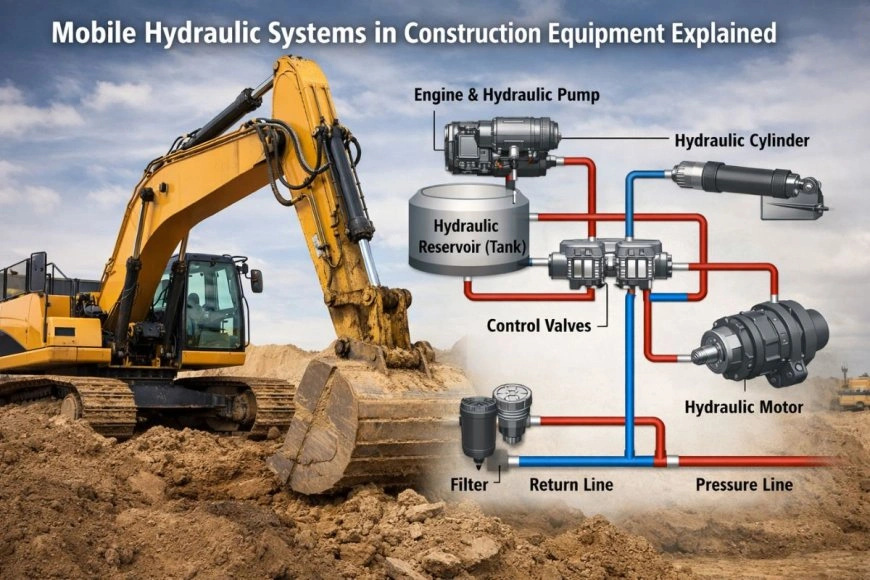
Hydraulic systems use fluid pressure to drive or control mechanical devices. These systems consist of pumps, valves, actuators, reservoirs, and connecting lines. When pressurized fluid flows through a system, it generates force that drives pistons, motors, or cylinders.
Hydraulic systems are widely used in mobile and industrial equipment such as excavators, presses, forklifts, tractors, and trucks. They can precisely control high loads, making them ideal for applications requiring smooth operation under various conditions. Because hydraulic fluid can be delivered through hoses, hydraulic systems allow for more flexible design compared to purely mechanical systems.
The main differences between mechanical systems and hydraulic systems
The main difference between mechanical and hydraulic systems lies in how they transmit power. Mechanical systems use solid components and motion, while hydraulic systems use pressurized fluid.
Hydraulic systems provide smoother, more controllable motion, making them ideal for heavy-duty or precision applications. In contrast, mechanical systems respond faster in simpler operations and are less prone to leaks or contamination.
Hydraulic systems are better suited for applications with variable forces and torques, while mechanical systems excel in applications requiring continuous motion and simple structures.
Hydraulic components may have a higher initial cost and require more maintenance, while mechanical systems typically have a lower initial cost and fewer components requiring maintenance.
Advantages of Mechanical Systems
Mechanical systems offer numerous advantages that make them suitable for specific applications:
Simplicity: Mechanical systems are generally easier to understand, assemble, and maintain.
Low Maintenance Costs: Due to fewer parts and the absence of fluid loops, mechanical systems require minimal maintenance to operate.
Instant Response: Mechanical linkages provide fast, stable motion, especially suitable for short-distance movements.
Affordability: They typically have low initial costs, making them ideal for basic tasks that do not require fluid power.
High Energy Efficiency: Mechanical systems can transmit energy with minimal losses, especially in direct-drive applications.
For applications such as conveyors, mechanical presses, gear-driven machinery, and basic lifting mechanisms, mechanical systems remain a reliable choice.
Advantages of Hydraulic Systems
Hydraulic systems offer many significant advantages, especially in demanding industrial and mobile environments:
Hydraulic systems offer many significant advantages, especially in demanding industrial and mobile environments:
High Power Density: Hydraulic systems can deliver significant force using relatively compact components.
Precise and Smooth Control: Fine-tuning of fluid pressure allows for precise and smooth control of motion and speed.
Versatile Design: Flexible hoses and modular components make installation easier in confined or irregular spaces.
Load Handling: Hydraulic systems are ideal for applications requiring heavy lifting, pushing, or clamping.
Overload Protection: Many hydraulic systems can be equipped with pressure relief valves or other devices to prevent damage when pressure exceeds safe limits.
Hydraulic equipment is widely used in construction, marine, and industrial sectors because it can maintain performance under harsh operating conditions. From excavators and cranes to industrial presses and steering systems, hydraulic systems provide control and power that mechanical systems often cannot match.
When to Use Each System
The choice between mechanical and hydraulic systems depends on several factors, including application, load requirements, cost, and available space.
The choice between mechanical and hydraulic systems depends on several factors, including application, load requirements, cost, and available space.
Use mechanical systems when:
The application requires fast, direct motion. Simplicity and low cost are primary considerations.
The risk of overload or electric shock is limited.
Use hydraulic systems when:
High power and high precision are critical. Load variations require fine control. The system needs to remain compact without sacrificing force.
In many cases, a combination of mechanical and hydraulic components provides optimal performance. For example, mechanical linkages can be hydraulically driven, allowing for the full utilization of the advantages of both systems in applications such as excavators, power steering systems, aircraft landing gear systems, and hydraulic presses with integrated mechanical linkages.
Find hydraulic pumps, motors, and parts now! Sino Hydraulics offers a wide range of hydraulic pumps, motors, and maintenance hydraulic components to support any hydraulic system, from small mobile machinery to large industrial installations.
If your application has specific requirements, we can customize pumps and motors to your specific specifications. Our extensive inventory and professional support team make it easy for you to find the products you need. You can contact us directly for personalized assistance with your hydraulic systems.
Different Types of Hydraulic Pumps
Hydraulic Pump Cavitation A Potential Threat to System Performance