The Evolution of Hydraulic Technology in the Construction Industry
2026-06-05
The Evolution of Hydraulic Technology in the Construction Industry
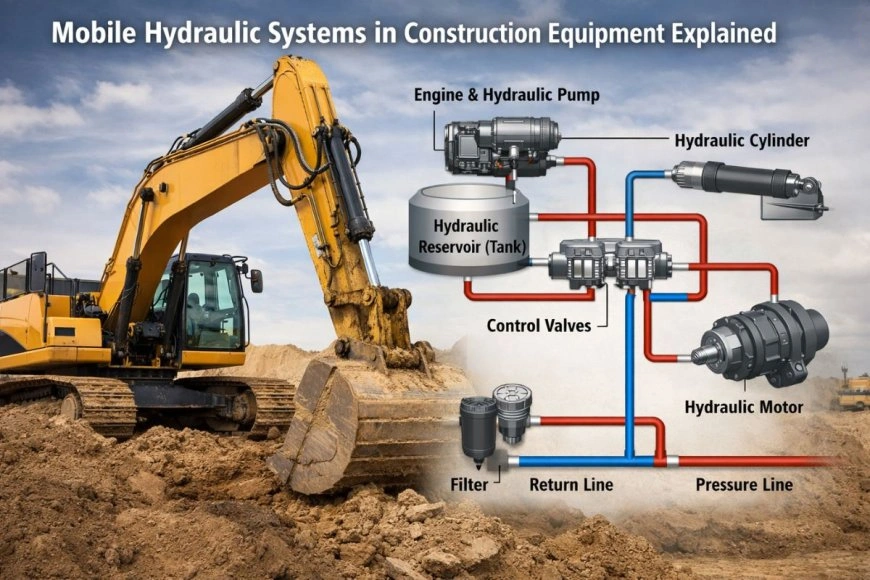
Hydraulic systems have revolutionized the construction industry, enabling heavy machinery to accomplish tasks impossible by hand. From excavators to cranes, machinery using hydraulic systems has become an indispensable part of modern construction projects.
Let's explore the evolution of hydraulic technology in construction over the years and understand the innovations shaping the future of the field.
Early Hydraulic Systems in the Construction Industry
The foundations of hydraulic technology in construction can be traced back to the 19th century, when engineers began applying early versions of the technology to lifting and excavating machinery. Before the widespread use of hydraulic machinery, the construction industry relied primarily on mechanical systems powered by steel cables, gears, and steam.
The foundations of hydraulic technology in construction can be traced back to the 19th century, when engineers began applying early versions of the technology to lifting and excavating machinery. Before the widespread use of hydraulic machinery, the construction industry relied primarily on mechanical systems powered by steel cables, gears, and steam.
While these early systems were effective to some extent, they were inefficient, difficult to control, and required extensive maintenance. The introduction of hydraulic engineering machinery transformed the entire industry, bringing greater precision, power, and reliability.
The First Hydraulic Crane
One of the earliest and most important innovations in the field was the hydraulic crane introduced in 1846 by Sir William Armstrong, a British engineer and industrialist. Armstrong developed this crane to improve material handling at the Newcastle docks. It replaced the traditional manual lifting mechanism with hydraulic power, significantly improving efficiency and reducing labor requirements.
One of the earliest and most important innovations in the field was the hydraulic crane introduced in 1846 by Sir William Armstrong, a British engineer and industrialist. Armstrong developed this crane to improve material handling at the Newcastle docks. It replaced the traditional manual lifting mechanism with hydraulic power, significantly improving efficiency and reducing labor requirements.
Armstrong's invention quickly spurred further innovation and improvements in lifting equipment design.
The First Hydraulic Excavator
Another early innovation in engineering machinery was the hydraulic excavator, built in 1882 by Sir W.G. Armstrong and his company for the construction of Hull Dock. This machine used water power to drive its excavating arm. Although rudimentary by today's standards, this innovation paved the way for subsequent inventions in the field of hydraulic excavators.
Another early innovation in engineering machinery was the hydraulic excavator, built in 1882 by Sir W.G. Armstrong and his company for the construction of Hull Dock. This machine used water power to drive its excavating arm. Although rudimentary by today's standards, this innovation paved the way for subsequent inventions in the field of hydraulic excavators.
By the end of the 19th century, hydraulic power had been applied to various fields, including excavators and lifting platforms.
The Expansion of Hydraulic Engineering Machinery in the 20th Century
In the early 20th century, hydraulic technology further developed as engineers introduced hydraulic cylinders and hydraulic pumps into heavy machinery. By the 1950s, hydraulic excavators, bulldozers, and cranes had largely replaced older mechanical operating equipment.
In the early 20th century, hydraulic technology further developed as engineers introduced hydraulic cylinders and hydraulic pumps into heavy machinery. By the 1950s, hydraulic excavators, bulldozers, and cranes had largely replaced older mechanical operating equipment.
Key innovations of this period included:
Hydraulic cylinders: providing greater lifting force and smoother operation.
Hydraulic pumps: improving the efficiency and reliability of engineering machinery.
Hydraulic power attachments, such as hydraulic breakers and augers, have expanded the functionality of construction equipment.
These developments have made hydraulic engineering machinery more powerful and adaptable, leading to its widespread application throughout the industry.
Modern Construction Hydraulic Technology
Modern hydraulic technology is at the heart of almost all heavy machinery, enabling faster, safer, and more precise operation. Today's machinery relies on sophisticated hydraulic systems to tackle the most demanding tasks.
Major Hydraulic Machinery Used in the Construction Industry
Some of the most commonly used hydraulic power machinery in the construction industry includes:
Excavators – Machines equipped with advanced hydraulic systems capable of precise digging, lifting, and material handling.
Bulldozers – Using hydraulic cylinders to control the blade, they are indispensable tools for earthmoving and leveling operations.
Crane and Telescopic Boom Forklifts – Relying on hydraulic lifting systems to lift heavy materials to great heights.
Trenching Machines – Utilizing hydraulic motors to cut rock and soil, excavating trenches for utilities and drainage systems.
Concrete Pumps – Utilizing hydraulics to efficiently deliver and distribute concrete to various construction sites.
Advantages of Hydraulic Machinery in Construction
Using hydraulic construction machinery offers several advantages:
Greater power and efficiency – Hydraulic systems generate greater force than mechanical systems.
Precise control – Hydraulic actuators and valves enable precise movements and responses.
Durability and reliability – Modern hydraulic pumps and filters extend the lifespan of the machinery.
Versatility – Machines using hydraulic systems can be equipped with a variety of attachments to perform different tasks.
The Future of Construction Hydraulic Technology
The future development of hydraulic technology in construction machinery focuses on efficiency, automation, and sustainability. Advances in electro-hydraulic integration technology improve precision and reduce fuel consumption, while hydraulic-electric hybrid systems reduce emissions and enhance performance.
Smart hydraulics and automation technologies are also transforming the industry. Predictive maintenance sensors now monitor fluid levels and pressures to prevent malfunctions; autonomous and remotely controlled hydraulic machinery improves the safety and efficiency of on-site operations.
Sustainability is another key focus, with biodegradable hydraulic fluids replacing traditional hydraulic fluids, and sealed circuits minimizing fluid waste. Furthermore, new high-pressure, compact hydraulic actuators are under development, offering smaller size and greater power, thus improving machine efficiency.
With the continuous development of construction machinery, we can expect to see more intelligent, cleaner, and more powerful hydraulic systems in the future.
For pump parts needed for construction machinery hydraulic systems, please contact Sino Hydraulics.
Tips and Tricks for Replacing a Hydraulic Pump
How to Repair Hydraulic System Jerking Issues